
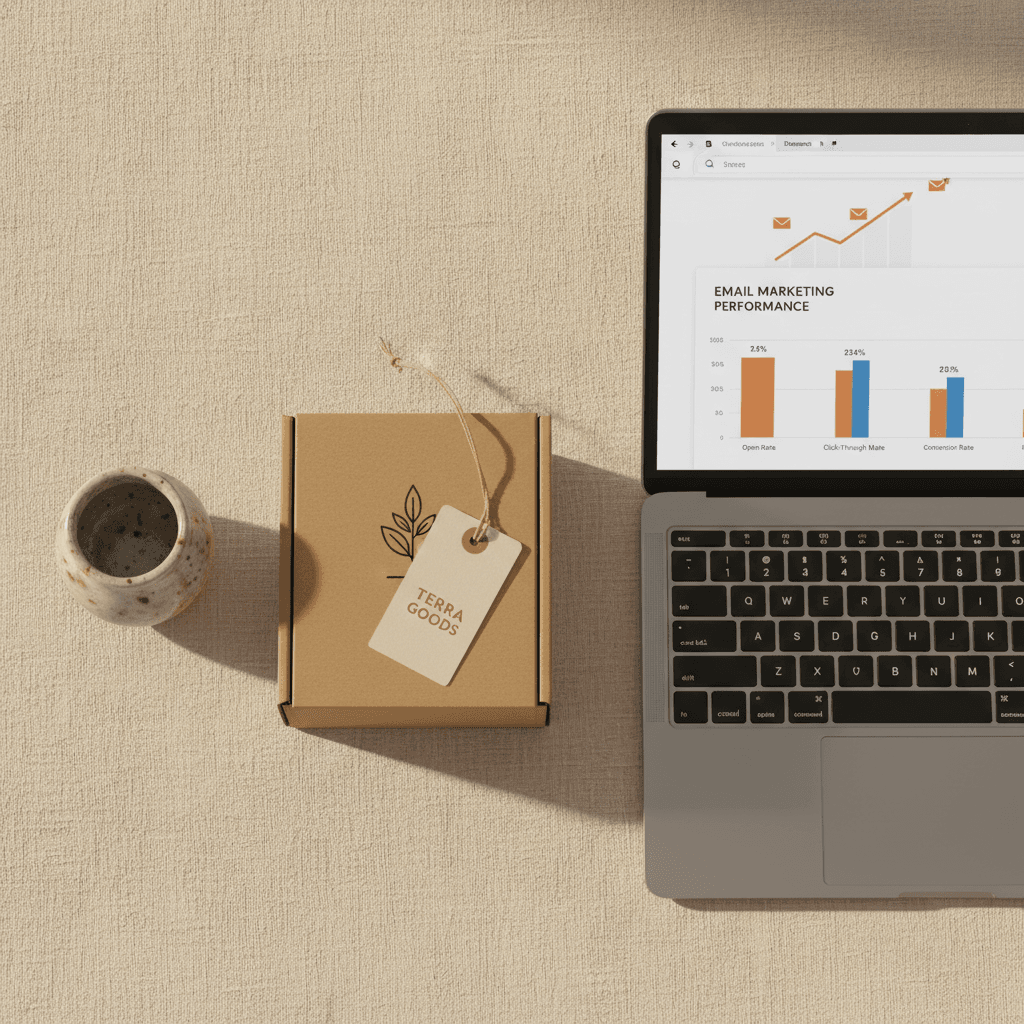
If you run a Shopify store and have not started email marketing yet, you are leaving money on the table every single day. Email consistently delivers the highest ROI of any marketing channel — industry benchmarks put it at $36 to $42 returned for every dollar spent. Shopify email marketing for beginners can feel overwhelming, but the good news is that you do not need to master everything at once. You need seven core campaigns, a basic tool setup, and a willingness to write honestly to your customers.
This guide walks you through exactly that. By the end, you will know what to send, when to send it, and how modern AI tools can dramatically reduce the time it takes to get your first campaigns live.
Why Email Is Still the Highest-ROI Channel for Shopify Stores
Social media reach is borrowed. You build an audience on Instagram or TikTok, and a single algorithm change can cut your organic reach in half overnight. Email is different. Your list is yours. No platform can take it away, throttle your reach, or charge you to reach people who already said they want to hear from you.
For Shopify stores specifically, email drives a disproportionate share of revenue. Repeat customers — the ones who come back a second and third time — almost always come back through email. A welcome email converting a first-time buyer into a loyal customer is worth far more than the revenue from that single initial purchase. Email builds the relationship that makes the lifetime value math work in your favor.
There is also the intent signal. Someone who subscribed to your list raised their hand and said they want to hear from you. That is categorically different from a cold ad impression. Conversion rates on email are consistently three to five times higher than on social media for most Shopify stores.
Getting Started: What You Need Before Your First Send
You need three things to run email marketing for your Shopify store: an email service provider (ESP), a way to build your list, and a basic content strategy. None of these require a big budget or technical expertise to set up at the beginner level.
Email service provider: Klaviyo is the most popular choice for Shopify stores because of its deep native integration. It pulls in product data, order history, and browsing behavior automatically, which makes segmentation and automation much easier. There are other solid options — Omnisend, Mailchimp, and Drip among them — but Klaviyo is the one most Shopify store owners eventually land on if they are serious about email. Most ESPs offer free plans for small lists, so you can start without paying anything.
List building: You need a way to capture email addresses. At minimum, set up a pop-up on your Shopify store with a compelling offer — a discount, early access, a free guide, whatever is relevant to your customers. Add an opt-in to your checkout flow. Put a subscribe link in your Instagram bio. You do not need a huge list to start — even 200 subscribers is enough to begin sending and learning.
Strategy: The seven campaigns below are your strategy. Start with the ones closest to the money (welcome and abandoned cart) and add the others over time.
Campaign 1: The Welcome Series
The welcome series is the single most important email campaign you will ever set up, and most Shopify stores either do not have one or have a one-email version that does almost none of the work it should.
A welcome series should span three to five emails over the first seven to ten days after someone subscribes. Here is a simple structure that works:
Email 1 (immediately): Deliver whatever you promised — the discount code, the guide, the early access link. Thank them for subscribing. Introduce your brand in one or two short paragraphs. Keep it warm and human. This is not the email to list every product you sell.
Email 2 (day 2 or 3): Tell your brand story. Why did you start this? What do you believe about your category? Customers who know the story behind a brand are significantly more likely to buy and stay loyal. This email builds the relationship.
Email 3 (day 5): Show your best-selling or most-loved product. Not a catalog — just one thing, with a real explanation of why your customers love it. Include a clear call to action.
Email 4 (day 7 to 10): Social proof. Testimonials, reviews, user-generated content. Let your existing customers do the convincing. Follow with a soft purchase CTA.
The timing matters less than the quality of what you say. A welcome series that sounds genuine will outperform a technically optimized but robotic one every time.
Campaign 2: Abandoned Cart
Between 70 and 80 percent of online shopping carts are abandoned before purchase. Abandoned cart emails recover a meaningful percentage of that revenue — industry averages hover around 5 to 10 percent recovery rate, which compounds significantly over time.
The standard abandoned cart sequence is three emails: one sent an hour after abandonment, one 24 hours later, and one 72 hours later. The first is a gentle reminder. The second adds social proof or answers common objections (is this product right for me? what is the return policy?). The third, if you are comfortable with discounting, can include a small incentive.
The copy angle matters. "You left something behind" is overused and a little passive-aggressive. Something closer to "We noticed you were looking at X — here is what our customers say about it" performs better for most brands. You are helping, not guilting.
Do not overthink the design for your first version. A plain text or lightly designed email often outperforms an elaborate template in abandoned cart flows. The goal is conversion, and clarity converts better than beauty at this stage of the funnel.
Campaign 3: Post-Purchase Thank You and Upsell
Most Shopify stores send a transactional order confirmation and nothing else. That is a missed opportunity. The period immediately after a purchase is when a customer's trust in your brand is highest. Use it.
Send a post-purchase email one to two days after the order confirmation. Thank them genuinely — not formulaically. Tell them what to expect (shipping timeline, how to reach support). Then, if it makes sense for your catalog, introduce one complementary product that pairs naturally with what they bought. Frame it as a recommendation, not a sales pitch.
A follow-up at day 7 to 14, once the product has arrived, asking for a review or feedback serves two purposes: it generates social proof for future customers, and it re-engages the buyer at a moment when they have fresh experience with your product.
Campaign 4: Product Launch
When you have something new to announce, your email list should be the first to know. This is one of the most important signals you can send your subscribers: being on your list means something. They get access, they get first look, they matter.
A product launch sequence typically has three to four emails: a teaser a few days before launch ("something new is coming"), a launch day announcement, a follow-up a few days later for people who did not open the launch email, and sometimes a "last chance" email if you have limited stock or an early-bird price.
The teaser is often underrated. Building anticipation makes the launch email feel like an event rather than just another promotional email. Customers who are curious open at higher rates.
Campaign 5: Promotional (Sale or Discount)
Promotional emails are the ones most beginners start with and the ones that wear out their welcome fastest when overused. The key discipline is to make your promotions feel like events, not like desperation.
Tie discounts to real reasons: a birthday, a holiday, a milestone, a seasonal shift, an anniversary. "25% off because it's Tuesday" trains your customers to wait for discounts. "25% off to celebrate our one-year anniversary" feels earned and special.
Promotional emails should be simple and direct. Big visual of the product, clear discount callout, single CTA, deadline. Do not bury the offer in paragraphs of copy.
Campaign 6: Win-Back (Lapsed Customers)
Customers who bought once and went quiet are not lost — they are just waiting to be reminded why they liked you. A win-back campaign targets customers who have not purchased or opened an email in 90 to 180 days, depending on your average purchase frequency.
The sequence typically runs two to three emails. The first acknowledges the gap without being weird about it — something like "We have not heard from you in a while" followed by a reminder of what makes your brand worth coming back to. The second introduces something new they might have missed. The third can include an incentive for returning.
If someone does not engage after your win-back sequence, remove them from your active list. Sending to chronically unengaged subscribers hurts your deliverability and your sender reputation. A smaller, engaged list is healthier than a large, unresponsive one.
Campaign 7: Content Newsletter (Brand Building)
The brands that build the strongest customer relationships through email are not the ones who only send discounts. They send content: behind-the-scenes stories, how-to guides, founder updates, curated recommendations, perspectives on their category.
A regular newsletter — even monthly — keeps your brand present in your customers' inboxes without always asking them to buy something. This builds the kind of trust that makes your promotional emails land better when you do send them.
The format does not need to be elaborate. A few paragraphs, an image, maybe a product mention. The goal is to be worth reading. If your subscribers look forward to your emails, you have built something most brands never achieve.
If you are on Instagram, you already have content to repurpose. Your best-performing posts, your Stories, your product explanations — all of that translates into email content with some adaptation.
How AI Removes the Blank-Page Problem for Beginners
The biggest obstacle beginners face with email marketing is not the strategy. They understand they should send welcome emails and abandoned cart flows. The obstacle is writing the actual content. What do you say? How do you make it sound like you and not like a generic template?
This is where AI tools are genuinely changing the game for small Shopify stores. Not in a "AI writes it so you do not have to think" way — the best AI tools amplify your voice rather than replace it. They analyze what you have already published — your Instagram posts, your product descriptions, your existing emails — and use that as the foundation for new content.
SendKite, for example, connects to your Instagram account and uses your actual posts to extract your brand voice, your product details, and your customer communication style. From there, it generates full email campaigns — including copy in three variants for you to choose from — that sound like you, not like a template. The AI handles the blank page. You handle the approval.
For a beginner who is also running every other part of their business, this is a significant unlock. You can have your first campaign live in minutes rather than hours, and you can iterate from a starting point that is already on-brand rather than building from scratch every time.
You can learn more about how AI-assisted email works in our complete guide to AI email marketing, and see examples of what automated Shopify campaigns look like in practice in our breakdown of why most Shopify email campaigns feel generic and how to fix it.
When you are ready to get your first campaigns set up, start your free trial of SendKite here. You can have a full campaign generated from your Instagram content in the time it would take you to write a single subject line from scratch.